The technology industry is evolving faster than ever. Artificial intelligence is changing how software is developed, cloud platforms are becoming the foundation of modern applications, cybersecurity threats are becoming more sophisticated, and DevOps practices are transforming how organizations build and deploy technology.
For students, IT professionals, career changers, and developers, this creates both challenges and opportunities.
The key question is no longer simply “What technology should I learn?” but “Which combination of skills will help me remain valuable as technology changes?”
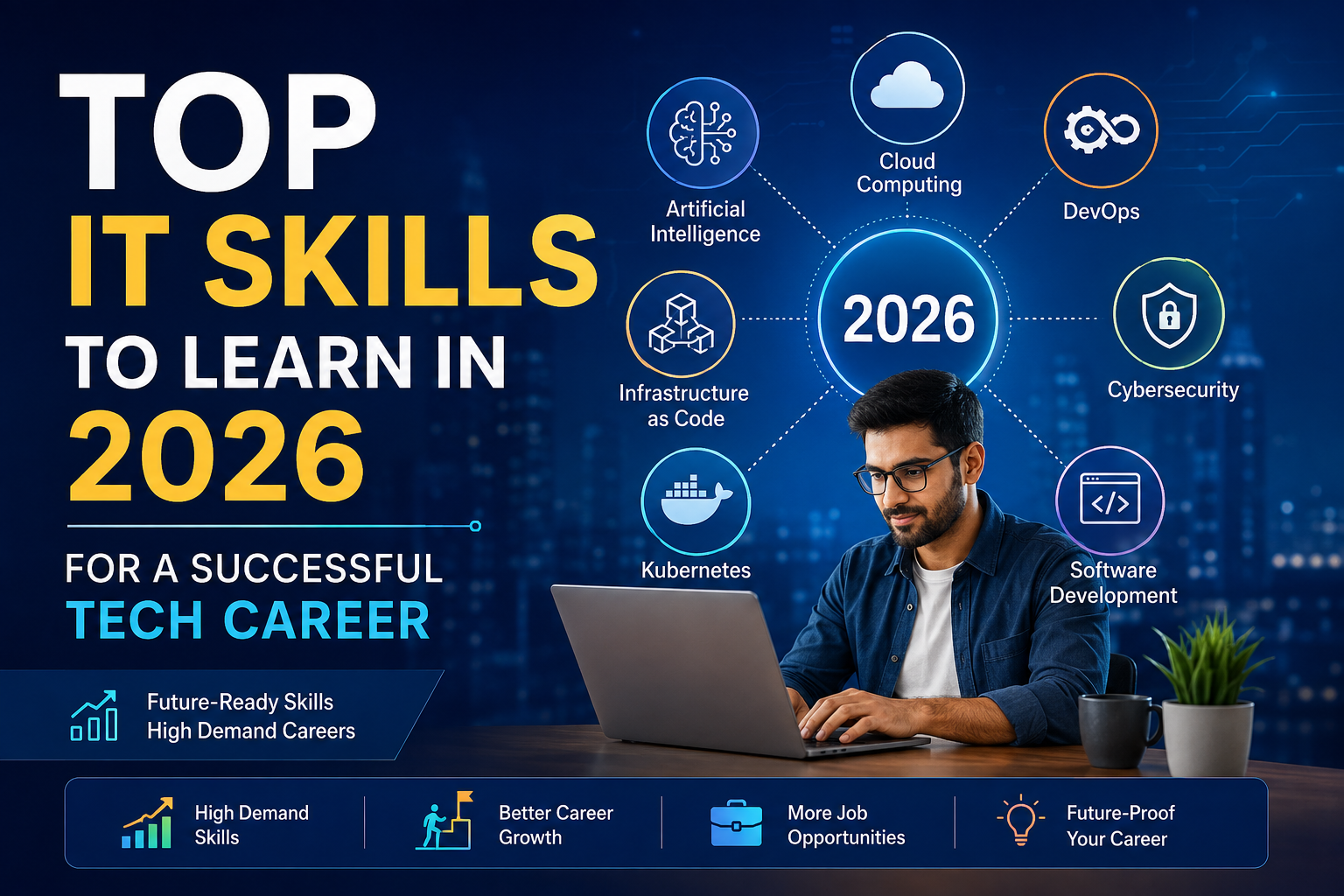
In 2026, employers are increasingly looking for professionals who combine strong technical fundamentals with AI, cloud, cybersecurity, automation, and problem-solving skills. A 2026 Linux Foundation technology talent report shows particularly strong organizational emphasis on upskilling across cloud and containers, DevOps/CI/CD, cybersecurity, data and analytics, platform engineering, and AI/ML.
In this guide, IT Campus explores the top IT skills to learn in 2026 and how you can build a practical career path around them.
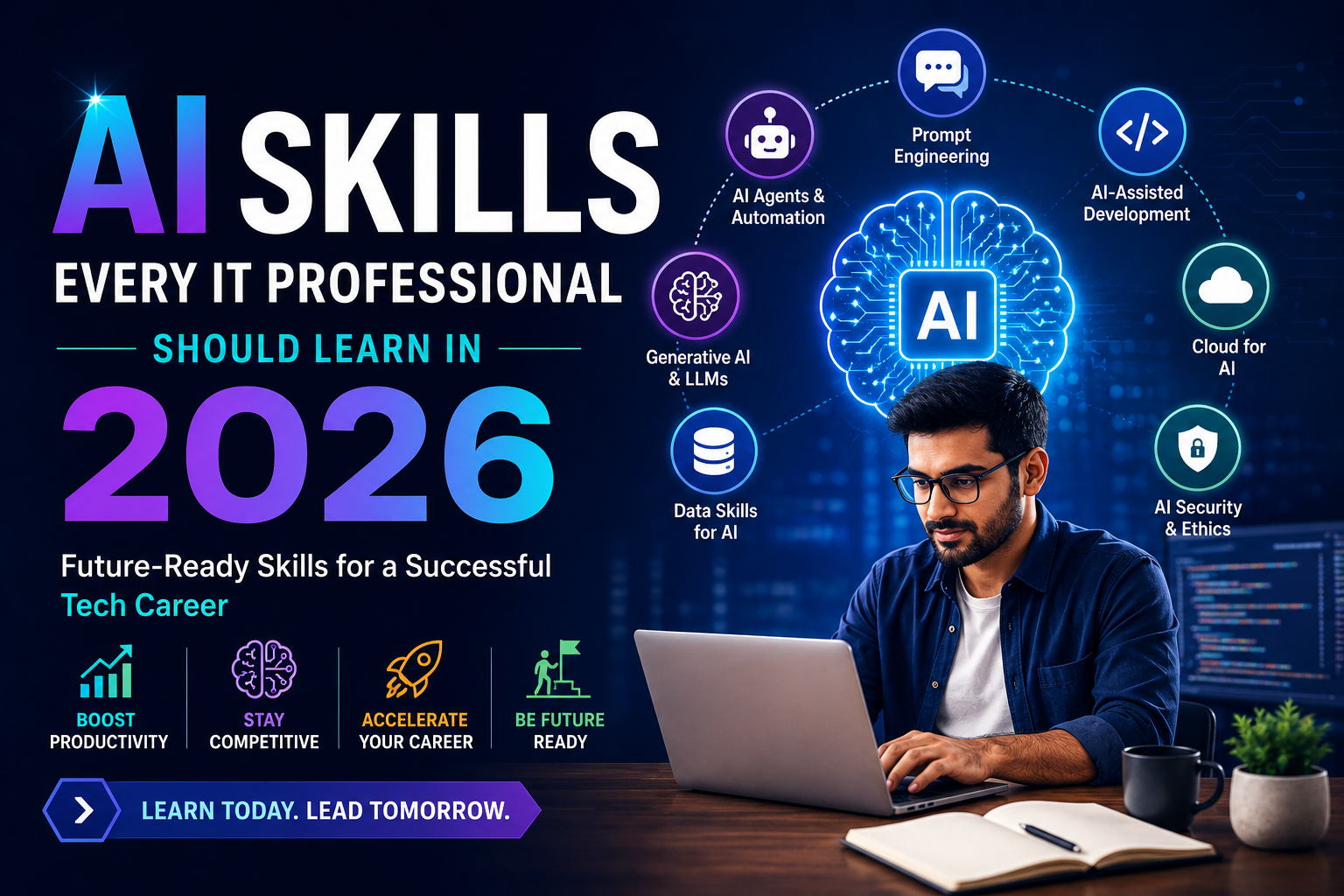
Artificial Intelligence is arguably the most important technology skill area to understand in 2026.
AI is no longer limited to data scientists and research laboratories. Software developers, cloud engineers, cybersecurity professionals, business analysts, project managers, and IT administrators are increasingly expected to understand how to use AI tools effectively.
The 2026 job-skills landscape shows growing demand for areas such as AI, AI agents, large language models, responsible AI, AI application development, and AI product strategy.
Skills to Learn:
You don't necessarily need to become an AI researcher. For many IT professionals, the more practical goal is to learn how to integrate AI into existing applications, workflows, and business processes.
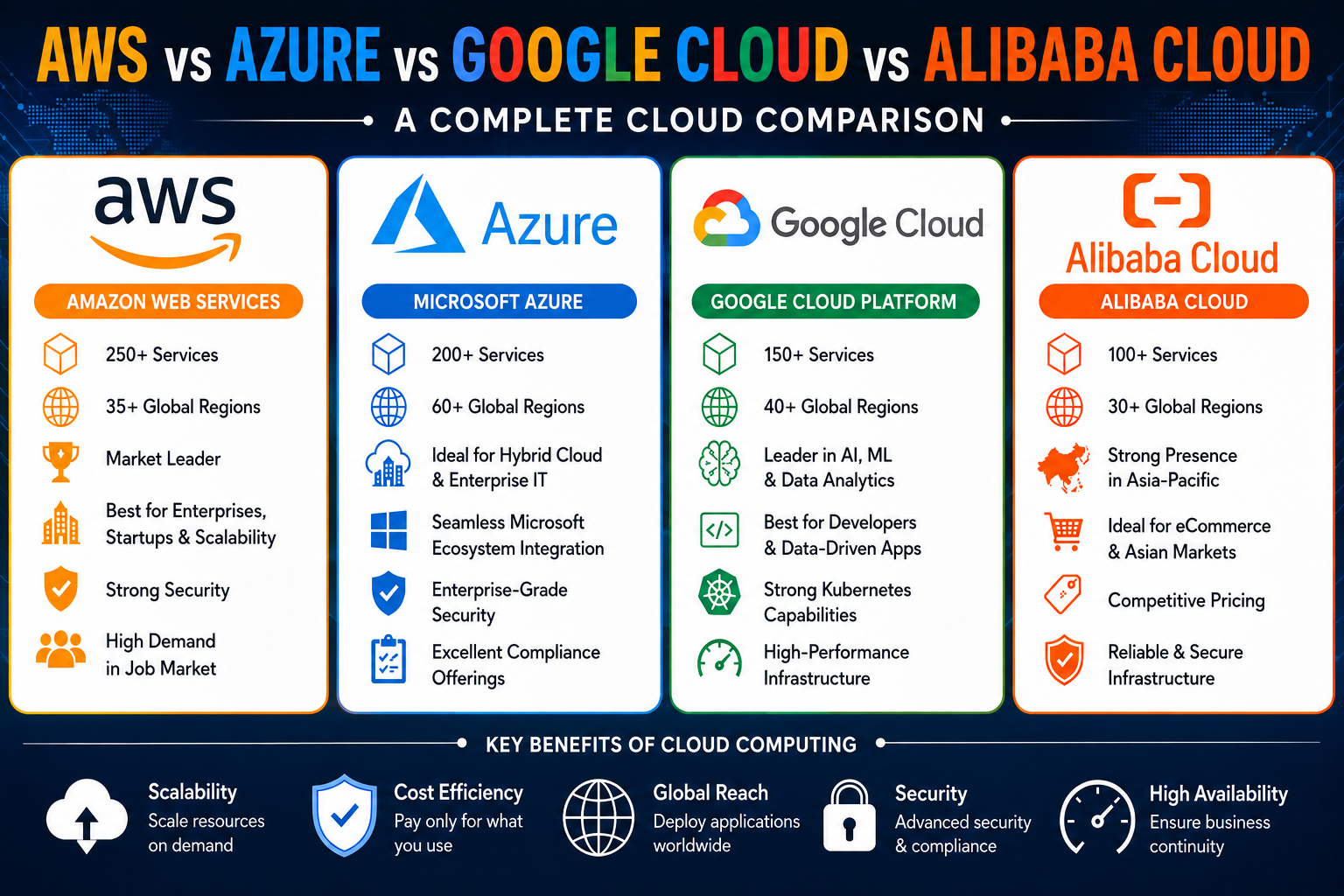
Cloud computing remains one of the most important foundations of modern IT.
Organizations continue to build, migrate, and modernize applications using platforms such as:
Cloud skills are particularly valuable because they connect with many other areas of technology, including DevOps, cybersecurity, AI, databases, networking, and software development.
The Linux Foundation's 2026 technology talent research identifies cloud and containers as a major priority, with organizations reporting a strong preference for upskilling existing technical talent.
Skills to Learn
Recommended Career Paths
Cloud knowledge can lead toward roles such as:
For beginners, starting with a cloud fundamentals certification such as Certified Cloud Practitioner or Microsoft Azure Fundamentals (AZ-900) can provide a solid foundation.
As organizations become increasingly dependent on cloud platforms, APIs, applications, AI, and connected systems, cybersecurity becomes even more important.
Modern cybersecurity is no longer just about antivirus software and firewalls. Professionals need to understand identities, cloud infrastructure, applications, data, endpoints, networks, and increasingly AI-related security risks.
Cybersecurity remains one of the major technical areas organizations are prioritizing for workforce development in 2026.
Important Cybersecurity Skills
AI is also creating new cybersecurity challenges. Organizations need professionals who understand both how AI can be used by attackers and how AI systems themselves can be secured.
Software development has changed significantly over the last decade.
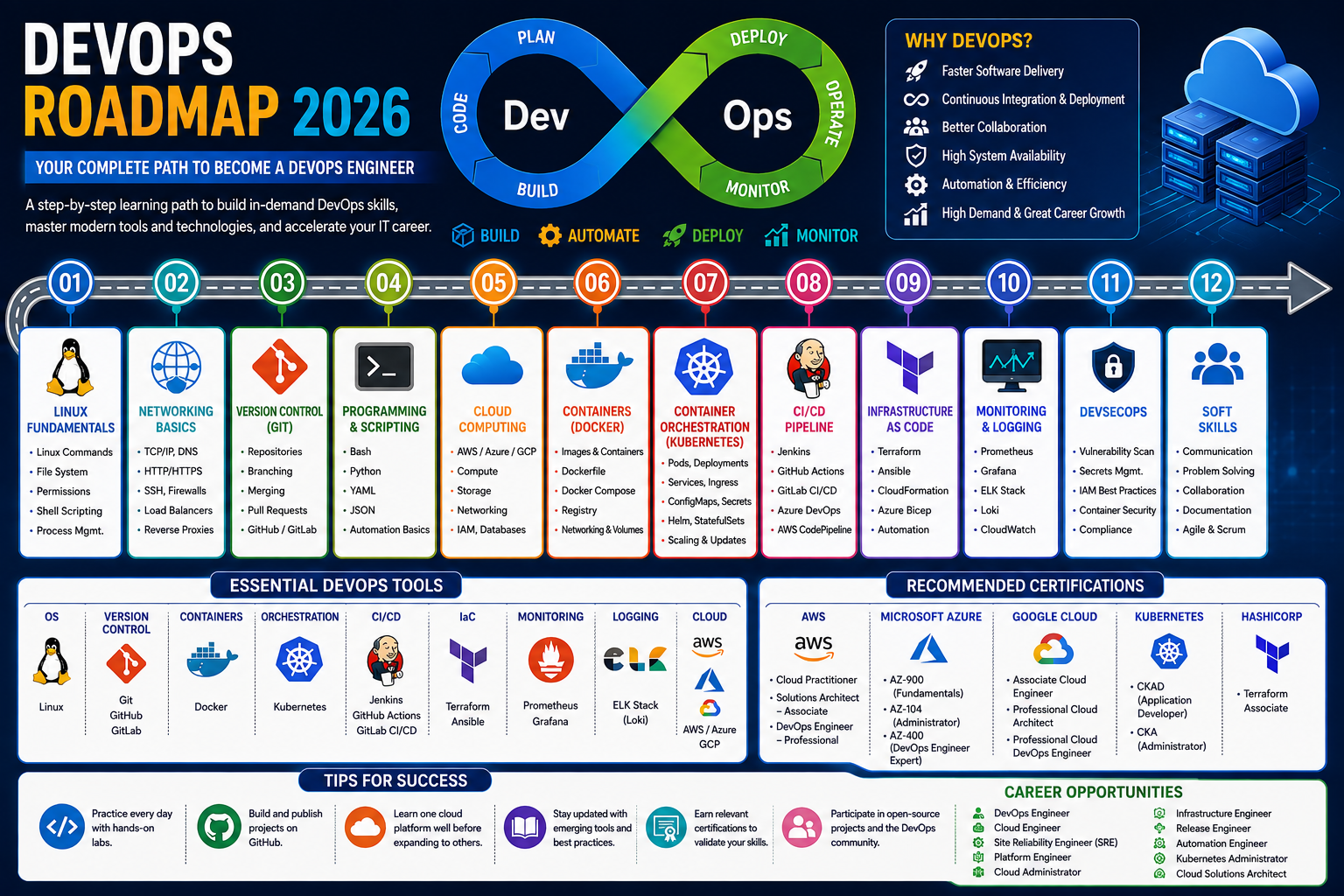
Organizations want to release applications faster while maintaining reliability and security. DevOps brings development and operations together through automation, collaboration, monitoring, testing, and continuous delivery.
In 2026, DevOps skills remain highly relevant, particularly around CI/CD, containers, Kubernetes, infrastructure as code, observability, and DevSecOps.
The Linux Foundation's 2026 research identifies DevOps, CI/CD and site reliability engineering as significant areas for organizational upskilling.
DevOps Skills to Learn
A strong DevOps professional doesn't simply know individual tools. They understand the complete software delivery lifecycle.
Containers have become an essential part of modern application deployment, and Kubernetes has become a key technology for managing containerized workloads.
If you're planning to build a career in DevOps, cloud engineering, platform engineering, or SRE, Kubernetes is a valuable skill to add to your learning path.
Skills to Learn
Kubernetes becomes particularly powerful when combined with cloud, Terraform, CI/CD, and observability
Modern infrastructure is increasingly managed through code instead of manually configuring servers.
Infrastructure as Code (IaC) allows IT teams to define infrastructure in repeatable, automated, version-controlled configurations.
Terraform is one of the important technologies to learn in this area.
Skills to Develop
Terraform also complements DevOps and cloud engineering extremely well.
Artificial Intelligence gets much of the attention, but data remains the foundation behind modern technology.
Organizations need professionals who can understand, manipulate, analyze, and communicate data.
SQL continues to be one of the most useful technical skills for IT professionals.
Skills to Learn
You don't have to become a data scientist to benefit from data skills.
A software developer, cloud engineer, business analyst, project manager, or cybersecurity professional can all benefit from understanding data.
AI-assisted development is changing software engineering, but programming fundamentals remain extremely important.
AI can generate code, but professionals still need to understand:
Current research on GenAI and software engineering highlights the continuing importance of foundational skills alongside the ability to use and critically evaluate AI-generated output.
Languages Worth Learning
The most important thing is not learning every programming language. Choose one primary language and develop strong fundamentals.
Modern businesses depend heavily on APIs.
Applications communicate with payment systems, CRMs, cloud platforms, AI services, databases, mobile applications, and third-party systems through APIs.
Important API Skills
API knowledge is particularly valuable for software developers, cloud engineers, integration specialists, and enterprise application professionals.
Automation is becoming a core IT skill.
Instead of manually performing repetitive tasks, IT professionals can automate provisioning, deployments, monitoring, testing, reporting, data processing, and administration.
Useful Automation Technologies
Automation also works extremely well with AI.
For example, an organization could combine:
AI + Python + APIs + Cloud + Automation
to build intelligent workflows that previously required significant manual effort.
Platform engineering is another skill area worth watching in 2026.
Platform teams build internal tools and platforms that allow developers to deploy applications more efficiently without needing to understand every underlying infrastructure component.
Skills to Learn
The 2026 Linux Foundation report lists platform engineering among the priority areas where organizations are investing in upskilling.
Technical skills alone aren't enough.
As AI handles more repetitive technical tasks, human skills become increasingly important.
Professionals should develop:
Current 2026 skills research also points toward the importance of adaptability and the ability to work effectively with AI rather than simply knowing how to operate individual tools.
You don't need to learn everything listed in this article.
Instead, choose a primary career path and then build supporting skills around it.
If you want to become a Cloud Engineer
Start with:
Networking → Linux → AWS/Azure → Cloud Security → Docker → Terraform → Kubernetes
If you want to become a DevOps Engineer
Follow:
Linux → Git → CI/CD → Docker → Kubernetes → Terraform → Cloud → Observability → DevSecOps
If you want to become an AI Developer
Consider:
Python → SQL → AI Fundamentals → LLMs → APIs → RAG → AI Agents → Cloud → AI Deployment
If you want to become a Cybersecurity Professional
Start with:
Networking → Linux/Windows → Security Fundamentals → IAM → SIEM → Cloud Security → Incident Response → Security Automation
If you want to become a Full-Stack Developer
Consider:
HTML/CSS → JavaScript → TypeScript → React/Angular → Backend → APIs → SQL → Git → Cloud → AI-assisted Development
The IT industry in 2026 is not moving toward one single technology. Instead, different technologies are increasingly converging.
The Linux Foundation's 2026 research shows that organizations are placing significant emphasis on upskilling across areas including AI/ML, cybersecurity, cloud and containers, DevOps, data and analytics, and platform engineering.
Therefore, the best strategy for building a successful tech career in 2026 is not to chase every new technology.
Build strong fundamentals, choose a specialization, develop practical projects, learn how to work with AI, and continuously update your skills.
At IT Campus, our goal is to help students and IT professionals develop practical, industry-relevant technology skills through structured training and hands-on learning.
Ready to build your IT career in 2026? Start with one skill, build one project, and keep progressing.
A modern IT training institute delivering industry-focused courses, practical projects, and expert mentorship to equip learners with real-world skills for successful IT careers.
A modern IT training institute delivering industry-focused courses, practical projects, and expert mentorship to equip learners with real-world skills for successful IT careers.